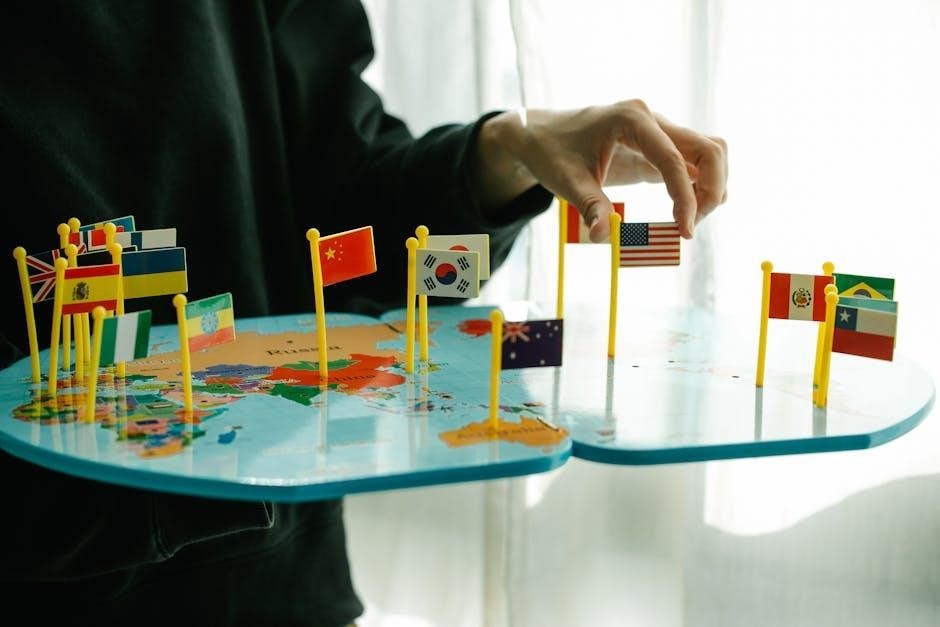
world war 2 study guide
World War II Study Guide: An Overview
This comprehensive guide explores the pivotal events of WWII, from its origins in the 1930s to the aftermath of 1945, detailing key battles and figures․
It examines the timeline of aggression, including Japan’s invasion of Manchuria in 1931 and Italy’s actions in Ethiopia during 1935-1936, setting the stage for global conflict․
Furthermore, the study guide analyzes the war’s major theaters, like Europe and the Pacific, and the turning points that ultimately led to the Allied victory․
World War II, a global conflict lasting from 1939 to 1945, remains the deadliest and most widespread war in history, involving the vast majority of the world’s countries․
Fueled by unresolved issues from World War I and the rise of aggressive ideologies, the war pitted the Axis powers – Germany, Italy, and Japan – against the Allied forces, initially led by Great Britain and France, later joined by the Soviet Union and the United States․
This conflict wasn’t simply a series of battles; it was a total war, impacting civilians and economies worldwide, and fundamentally reshaping the geopolitical landscape․ Understanding its origins, key events, and consequences is crucial for comprehending the 20th and 21st centuries․
Causes of World War II
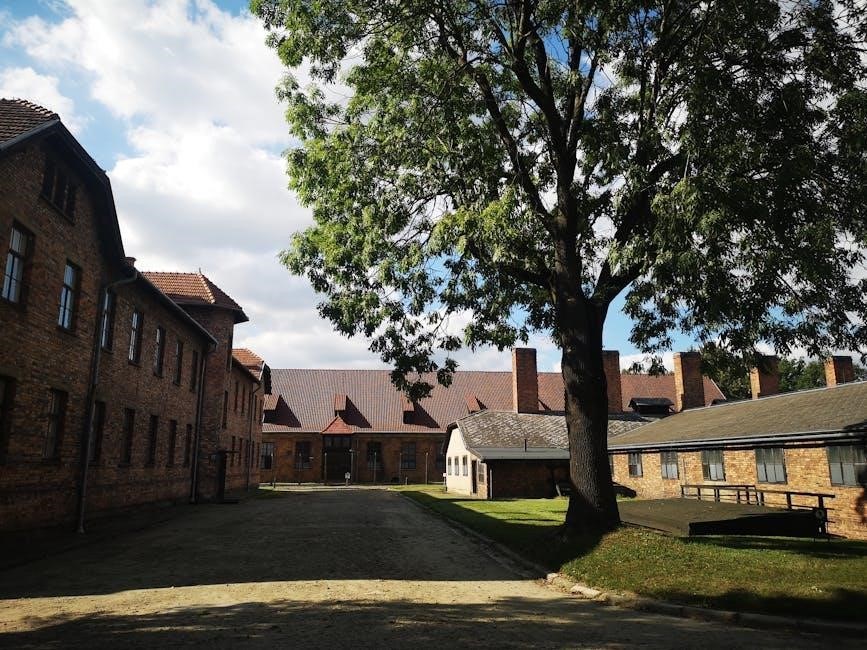
The seeds of World War II were sown in the aftermath of World War I, with the Treaty of Versailles imposing harsh terms on Germany, fostering resentment and economic instability․
The rise of aggressive nationalism and expansionist ideologies, particularly in Germany, Italy, and Japan, created a volatile international climate․ Germany’s desire for Lebensraum (living space) and Italy’s imperial ambitions in Africa fueled early aggression․
Furthermore, the failure of the League of Nations to effectively address these challenges, coupled with appeasement policies adopted by Britain and France, emboldened the Axis powers and ultimately contributed to the outbreak of war․
The Road to War: Early Aggression
The 1930s witnessed a series of aggressive actions that steadily escalated tensions, paving the way for a larger conflict․ Japan’s invasion of Manchuria in 1931 demonstrated a blatant disregard for international law and the League of Nations’ authority․
Italy’s invasion and annexation of Ethiopia in 1935-1936 further highlighted the ineffectiveness of collective security․ Simultaneously, Germany began to openly defy the Treaty of Versailles, rearming and remilitarizing the Rhineland in 1936, testing the resolve of European powers․
These acts of aggression, met with limited resistance, encouraged further expansionist policies and ultimately eroded the fragile peace․
Japanese Expansion in Asia (1931-1937)
Japan’s expansionist policies in Asia began with the invasion of Manchuria in September 1931, establishing a puppet state called Manchukuo․ This act, driven by resource scarcity and imperial ambitions, was condemned by the League of Nations, though no effective action was taken․
Further aggression followed with the Marco Polo Bridge Incident in 1937, triggering the Second Sino-Japanese War․ Japan rapidly occupied large swathes of China, committing atrocities like the Nanking Massacre, demonstrating a brutal disregard for civilian life․
These actions signaled Japan’s intent to dominate East Asia and challenged the existing international order․
Italian Expansion in Africa (1935-1936)
Italy, under Benito Mussolini, pursued an aggressive colonial policy in Africa, initiating the invasion of Ethiopia in October 1935․ This act of expansion was motivated by a desire to recreate the Roman Empire and secure resources․
Despite Ethiopia’s plea to the League of Nations, limited sanctions were imposed, proving ineffective in halting Italy’s advance․ Italy employed brutal tactics, including the use of chemical weapons, to subdue Ethiopian resistance․
By May 1936, Italy had conquered Ethiopia, annexing it to its existing colonies in Eritrea and Somaliland, further destabilizing the international landscape․
German Expansion and the Rhineland (1936-1938)
Adolf Hitler defied the Treaty of Versailles in March 1936 by re-militarizing the Rhineland, a demilitarized zone bordering France and Belgium․ This bold move tested the resolve of Britain and France, who responded with cautious appeasement rather than forceful intervention․
In March 1938, Germany annexed Austria (the Anschluss), again meeting little resistance from the European powers․ This expansionist policy signaled Hitler’s growing ambition and disregard for international agreements․
The Munich Agreement in September 1938 allowed Germany to annex the Sudetenland region of Czechoslovakia, further demonstrating the policy of appeasement and emboldening Hitler’s aggressive intentions․
Key Events and Timeline (1939-1941)
The period from 1939 to 1941 marked the rapid escalation of WWII․ Germany’s invasion of Poland on September 1, 1939, triggered declarations of war from France and the United Kingdom, officially initiating the conflict․
Following the invasion, a period known as the “Phoney War” ensued, characterized by limited military action․ However, in May-June 1940, Germany swiftly conquered France, leading to its fall and the establishment of a collaborationist regime․
The Battle of Britain (July-October 1940) saw the Luftwaffe attempt to gain air superiority over Britain, ultimately failing due to the Royal Air Force’s resilience, preventing a German invasion․

Invasion of Poland and the Start of the War (September 1939)
On September 1, 1939, Germany initiated its invasion of Poland, employing the “Blitzkrieg” tactic – a swift, coordinated attack utilizing tanks, air power, and infantry․ This act of aggression, violating international treaties, prompted declarations of war from France and the United Kingdom on September 3rd․
The invasion swiftly overwhelmed Polish defenses, despite their valiant resistance․ Germany’s superior military technology and tactics proved decisive․ Simultaneously, the Soviet Union invaded Poland from the east on September 17th, further sealing Poland’s fate․
This invasion is widely considered the official start of World War II, marking the beginning of a global conflict that would reshape the 20th century and beyond․
The Phoney War (1939-1940)
Following the declaration of war in September 1939, an unusual period of inactivity ensued, known as the “Phoney War” or “Sitzkrieg” (sitting war)․ Despite being at war, there was surprisingly little large-scale combat on the Western Front․ Both France and Britain prepared for a protracted conflict, but avoided major offensives․
This period was characterized by limited military operations, primarily consisting of minor skirmishes and reconnaissance missions․ British forces did deploy to France, but remained largely static․
The Phoney War ended abruptly in May 1940 with the German invasion of France and the Low Countries, shattering the illusion of a static conflict and initiating a period of intense fighting․
Battle of France and Fall of France (May-June 1940)
The Battle of France, commencing in May 1940, marked a swift and decisive German victory․ Utilizing the “Blitzkrieg” (lightning war) tactic, German forces bypassed the heavily fortified Maginot Line, striking through the Ardennes Forest․ This unexpected maneuver caught Allied forces off guard․
Rapid advances by German panzer divisions quickly overwhelmed French and British defenses, encircling and isolating Allied troops․ The British Expeditionary Force narrowly escaped capture during the Dunkirk evacuation․

By June 1940, France had fallen, leading to the establishment of a German-controlled Vichy France and a significant blow to Allied morale․ This victory solidified German dominance in Western Europe․
Battle of Britain (July-October 1940)
Following the Fall of France, the Battle of Britain represented Germany’s first major strategic failure of WWII․ The Luftwaffe, German air force, launched a sustained aerial campaign against Britain, aiming to achieve air superiority as a prelude to a potential invasion – Operation Sea Lion․
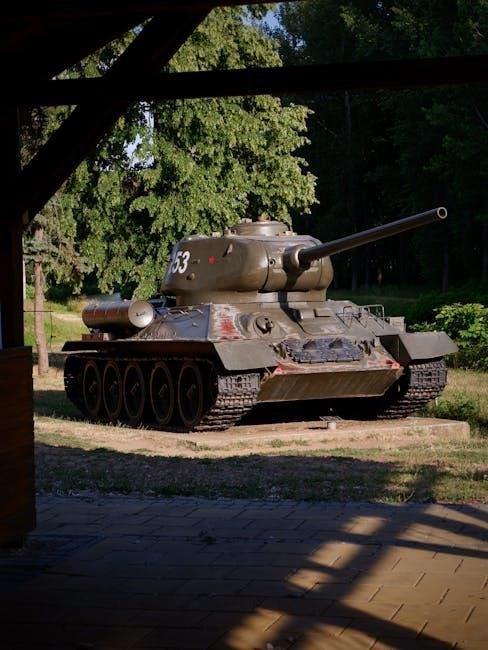
The Royal Air Force (RAF), though outnumbered, fiercely defended British airspace, utilizing radar technology and the skill of its pilots․ The battle involved intense dogfights and bombing raids over Britain․
Ultimately, the RAF’s resilience and Britain’s effective defense systems forced Germany to abandon its invasion plans, marking a crucial turning point in the war․
The War Widens: Global Conflict (1941-1942)
1941 marked a dramatic escalation of WWII, transforming it into a truly global conflict․ In June, Germany launched Operation Barbarossa, a massive invasion of the Soviet Union, opening a brutal Eastern Front․ This shattered the non-aggression pact and embroiled the USSR in the war․
Then, in December, the Japanese attack on Pearl Harbor brought the United States into the conflict․ This surprise attack galvanized American public opinion and led to a formal declaration of war against Japan․

These events fundamentally altered the war’s scope, creating a multi-front struggle spanning Europe, Asia, and the Pacific․
Operation Barbarossa: Invasion of the Soviet Union (June 1941)
Launched on June 22, 1941, Operation Barbarossa was Nazi Germany’s colossal invasion of the Soviet Union․ Employing over three million Axis soldiers, it aimed for a swift victory through a blitzkrieg strategy, targeting key Soviet infrastructure and population centers․
Despite initial successes and significant territorial gains, the invasion faced fierce Soviet resistance and logistical challenges․ The vast distances, harsh weather conditions, and unexpectedly strong Red Army defense slowed the German advance․
This operation opened the Eastern Front, becoming the largest and bloodiest theater of WWII, ultimately proving a turning point in the war’s trajectory․
Pearl Harbor and US Entry into the War (December 1941)
On December 7, 1941, the Japanese launched a surprise aerial attack on Pearl Harbor, Hawaii․ This devastating strike aimed to cripple the US Pacific Fleet, preventing American interference in Japanese military actions in Southeast Asia․
The attack resulted in significant casualties and damage, including the loss of over 2,400 American lives and the destruction of numerous ships and aircraft․
The following day, the United States declared war on Japan, officially entering World War II․ This pivotal moment transformed the conflict into a truly global war, shifting the balance of power․
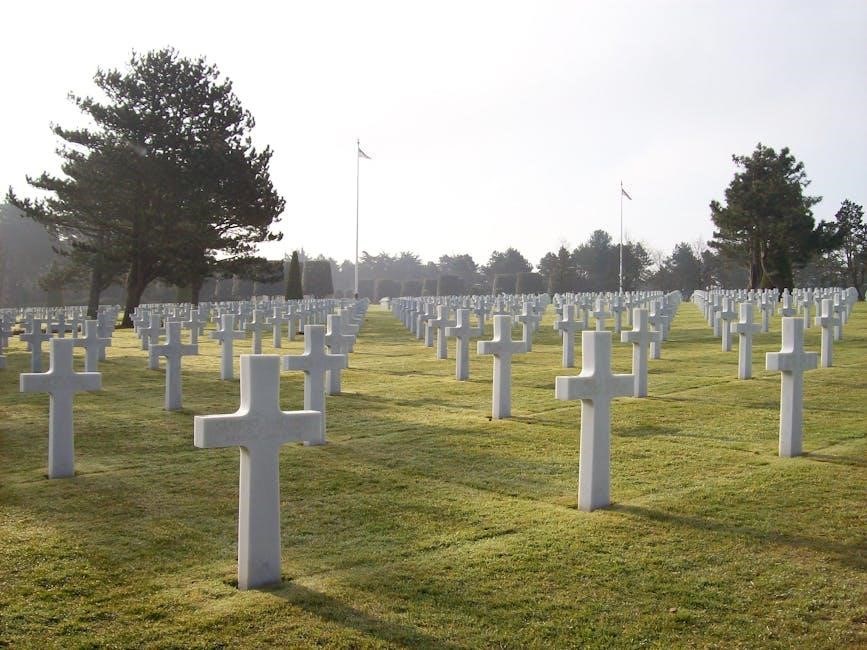
Major Theaters of War
World War II was fought across multiple continents, with two primary theaters dominating the conflict: Europe and the Pacific․ The European Theater witnessed intense fighting between the Axis powers – primarily Germany, Italy, and their allies – and the Allied forces, including Great Britain, the Soviet Union, and the United States․
Battles raged across Eastern and Western Europe, encompassing campaigns in North Africa, Italy, and France․ Simultaneously, the Pacific Theater saw a brutal struggle between Japan and the Allied powers, particularly the United States․
This theater involved island-hopping campaigns, naval battles, and fierce land combat across the vast Pacific Ocean․
European Theater
The European Theater was the main focus of World War II, characterized by relentless land campaigns and aerial bombardment․ Germany’s initial blitzkrieg tactics overwhelmed much of Western Europe, leading to the fall of France in 1940 and the prolonged Battle of Britain․
The Eastern Front witnessed brutal fighting between Germany and the Soviet Union, including the pivotal Battle of Stalingrad․ North Africa became a crucial battleground, with campaigns fought between Axis and Allied forces for control of vital resources and strategic locations․
Ultimately, the D-Day landings in Normandy marked a turning point, initiating the liberation of Western Europe and paving the way for Germany’s defeat․
Pacific Theater
The Pacific Theater of WWII was a vast, oceanic conflict dominated by naval warfare and island-hopping campaigns․ Following the attack on Pearl Harbor, the United States engaged in a grueling struggle against Japan for control of the Pacific․
Key battles included Midway, a decisive naval victory for the US, and Guadalcanal, a protracted and costly land campaign․ The island-hopping strategy allowed Allied forces to gradually advance towards Japan, bypassing heavily fortified islands․
The war culminated in the atomic bombings of Hiroshima and Nagasaki, leading to Japan’s unconditional surrender and the end of WWII․
Turning Points of the War (1942-1943)
1942-1943 marked a critical shift in momentum during World War II, witnessing pivotal battles that altered the course of the conflict․ The Battle of Stalingrad, a brutal and prolonged struggle, halted the German advance into the Soviet Union and became a turning point on the Eastern Front․
Simultaneously, the Battle of Midway in the Pacific proved decisive, crippling the Japanese navy and halting their expansion․ These victories, alongside the Allied North African campaign, signaled a weakening of the Axis powers․
These turning points demonstrated the resilience of the Allied forces and paved the way for eventual victory․
Battle of Stalingrad (August 1942 – February 1943)
The Battle of Stalingrad was a brutal, five-month struggle, considered a pivotal turning point on the Eastern Front․ German forces aimed to capture the strategically important city of Stalingrad, leading to intense house-to-house fighting and immense casualties on both sides․
Soviet resistance proved fierce, utilizing urban warfare tactics and relentless counterattacks․ The German Sixth Army became encircled and ultimately surrendered in February 1943, marking a devastating defeat․
This victory halted the German advance into the Soviet Union and signified a major shift in the war’s momentum, exhausting German resources․
Battle of Midway (June 1942)
The Battle of Midway, fought in June 1942, was a decisive naval battle in the Pacific Theater․ Following Pearl Harbor, Japan aimed to destroy the remaining US aircraft carriers, hoping to secure dominance in the Pacific․
However, US naval intelligence had broken Japanese codes, allowing them to anticipate the attack and prepare an ambush․ The battle resulted in the sinking of four Japanese aircraft carriers, a crippling blow to their naval power․
Midway marked a turning point, shifting the strategic initiative to the United States and halting Japan’s eastward expansion․
D-Day and the Liberation of Europe (1944-1945)
D-Day, the Normandy landings on June 6, 1944, represented the largest seaborne invasion in history․ Allied forces stormed the beaches of Normandy, France, initiating the liberation of Western Europe from Nazi occupation․
Despite fierce German resistance, the Allies established a foothold, gradually expanding their control across France and pushing towards Germany․ This operation opened a crucial second front, relieving pressure on the Soviet Union in the East․
Following D-Day, a relentless campaign led to Germany’s eventual surrender in May 1945, marking the end of the war in Europe․

The End of the War and Aftermath
Germany’s unconditional surrender in May 1945 signaled the end of World War II in Europe, though fighting continued in the Pacific․ The conflict’s devastating conclusion involved the unprecedented use of atomic weapons․
In August 1945, the United States dropped atomic bombs on Hiroshima and Nagasaki, Japan, resulting in immense destruction and loss of life․ These events compelled Japan’s surrender on September 2, 1945, formally ending WWII․
The aftermath saw the reshaping of the global political landscape, the rise of the United States and the Soviet Union, and the establishment of the United Nations․
Germany’s Surrender (May 1945)
By early 1945, Germany faced relentless pressure from Allied forces advancing from both the East and West․ The Soviet Red Army encircled Berlin, while American and British troops pushed into the heart of Germany․
Adolf Hitler, refusing to concede defeat, committed suicide on April 30, 1945, in his Berlin bunker․ Following his death, German forces largely disintegrated, and negotiations for unconditional surrender began․
On May 7, 1945, General Alfred Jodl signed the instrument of surrender at Reims, France․ A formal ratification occurred on May 8, 1945, in Berlin, marking Victory in Europe Day (V-E Day)․
Atomic Bombings of Hiroshima and Nagasaki (August 1945)
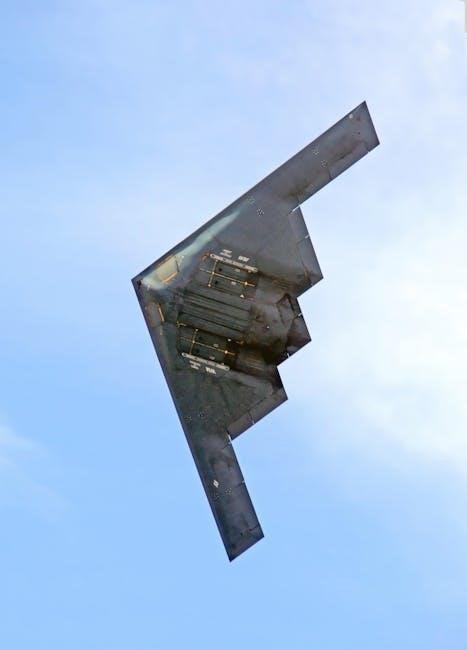
Facing continued Japanese resistance, and seeking to avoid a costly invasion of the Japanese mainland, the United States employed a new weapon – the atomic bomb․
On August 6, 1945, the “Little Boy” bomb was dropped on Hiroshima, instantly killing tens of thousands and causing widespread devastation․ Three days later, on August 9th, “Fat Man” was detonated over Nagasaki, resulting in similar catastrophic consequences․
These bombings prompted Japan’s unconditional surrender, bringing World War II to an end․ The use of atomic weapons remains a highly debated topic, raising profound ethical and moral questions․
Japan’s Surrender and the End of WWII (September 1945)
Following the atomic bombings of Hiroshima and Nagasaki, and the Soviet Union’s declaration of war against Japan, Emperor Hirohito announced Japan’s unconditional surrender on August 15, 1945․
The formal surrender ceremony took place on September 2, 1945, aboard the USS Missouri in Tokyo Bay․ This event officially marked the end of World War II, after six years of global conflict and immense loss of life․
The aftermath saw the beginning of the Allied occupation of Japan, led by General Douglas MacArthur, initiating a period of democratization and rebuilding for the nation․

Key Figures of World War II
World War II witnessed the rise and impact of numerous influential leaders, both military and political․ Adolf Hitler, as the dictator of Nazi Germany, instigated the war and oversaw the Holocaust, a horrific genocide․
Franklin D․ Roosevelt, the US President, guided America through much of the war, while Winston Churchill rallied Britain against Nazi aggression․ Joseph Stalin led the Soviet Union, playing a crucial role in the Eastern Front․
Other key figures include General Dwight D․ Eisenhower, the Supreme Commander of the Allied Expeditionary Force, and Emperor Hirohito of Japan․